


My dad is responsible for introducing me to technology and encouraging my love of building. He is a professor of management information systems. As a kid, I didn’t really understand what that meant—but I did know he had access to computers. One day, he brought one home and programmed a math game just for me. Every time I got a question right, it would say “Shaabaash!”, which is a Hindi exclamation for “Good job!”
That early experience with technology exposed me not just to the final product, but the way it was built. I couldn’t believe my dad wrote this game, and then, just like that, I could practice math. And somehow it said shaabaash, just like my dad would say to me! It was the coolest thing in the world.
As a fifth birthday present, my dad gave me a small red toolbox (that closely resembled his big silver one). There wasn’t much to do in our tiny apartment, but I did have a kids-size chair. Again and again, I would lock myself in the bathroom—with the toolbox—to take the chair apart and see what happened when I put them together the right way, or swapped the legs or directions. I wondered, Why do these fit the way they do? Why do some configurations still work and some don’t?
That curiosity stayed with me in engineering magnet high school, where I got involved with the robotics team and competitions. It stimulated my love for building, but I found myself gravitating toward the overlooked areas. While everyone else worked on the robot, I was concerned about the fringes: What about documentation? How did we get sponsorships so we can go to extra competitions? How did we ensure other people are having a good time?
From the beginning, I’ve been passionate about people having good experiences. Wherever I am, if I can create a culture where people are empowered to have fun and do their best work, that comes through in the project—and people on the other side experience that as well.
Transition to tech, code and finding momentum
I graduated from MIT with a mechanical engineering degree with a concentration in energy, then became an energy consultant with clients all over the U.S. I would fly in on Monday and out on Thursday or Friday. At one point, I was on a special project that had me flying to 10 cities every two weeks. Even so, I wanted a faster pace of life, where I could see the impact of my work immediately. I got interested in startups and quickly realized one of the fastest avenues into that world was to join the tech side. I needed to program.
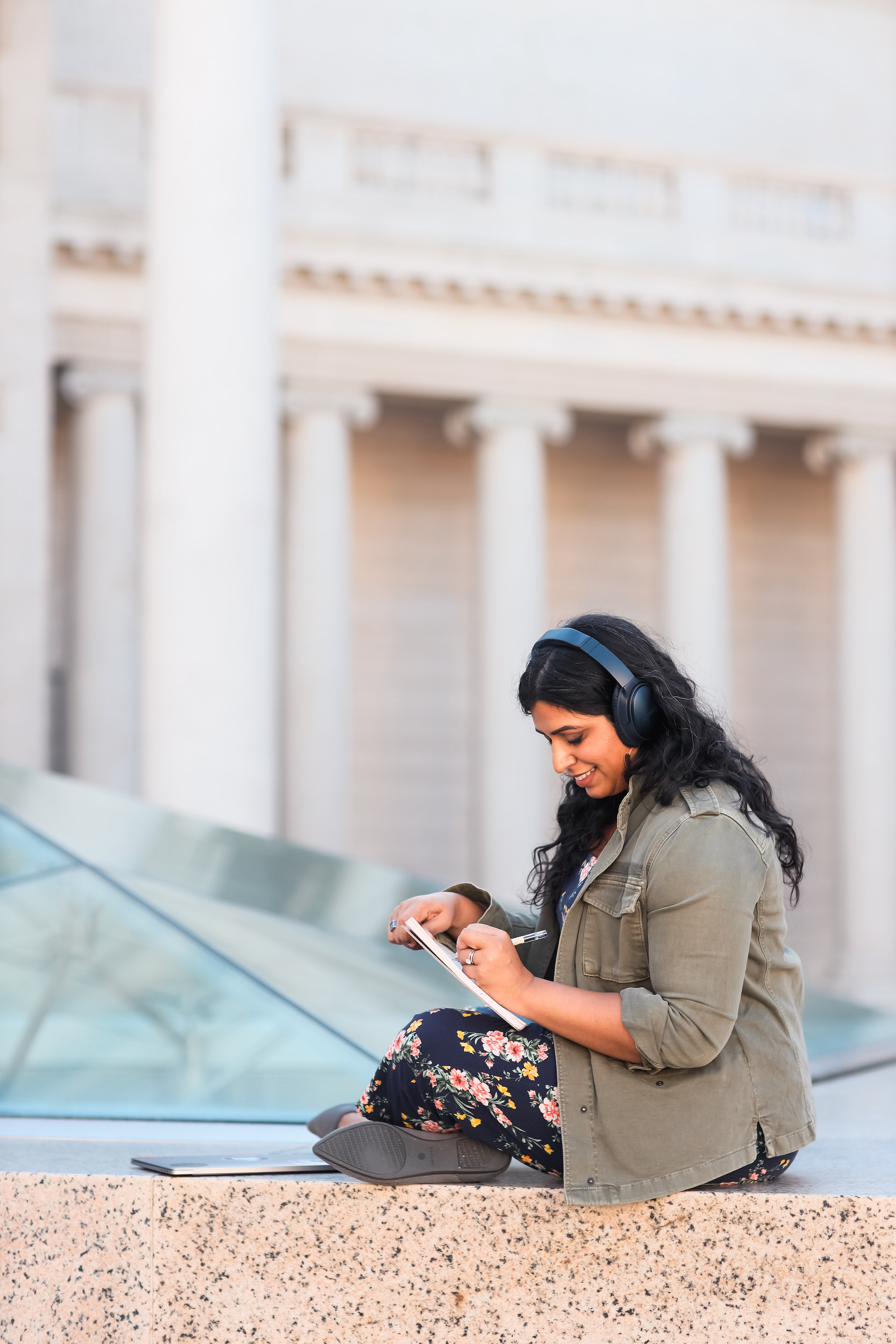
There are a thousand ways to learn how to code, but it was hard for me, and I was slow to put myself out there. I got involved just as Massive Open Online Courses (MOOCs) became popular, and people advised me to “do the hardest thing.” I’d done some programming in school, but was trying to learn Scala from the beginning, and they taught the curriculum assuming we knew Java. I didn’t know Java. And I felt that frustration strongly.
Then I read a blog post about the process of learning, which gave advice to “follow your momentum.” I was trying to learn Java because I thought I had to, and this advice empowered me to drop what wasn’t working and try new paths until I found what worked. It was a huge turning point. Java just wasn’t for me. Pythonenabled me to write how I speak and think, so that’s where I started. Instead of forcing the path that was “supposed” to work, I embraced the one that felt more natural—and built a deeper, more intuitive knowledge base.
I’ve been using this mantra ever since, especially when I face friction. If one area isn’t working, find another way to approach it. Follow your momentum. Your way won’t always be the same as everyone else’s. Drop what doesn’t work. Believe it or not, if it’s important, it will surface again.
Falling into a transformative leadership opportunity
Along my journey, I went to a Write/Speak/Code event and met founder Rebecca Miller-Webster. I shared my great experience at the event, and she mentioned they needed board members. I went to a board meeting thinking I’d get more information about the board, but everyone got straight to the future of Write/Speak/Code. I asked where I could learn about the board, and they said, “Oh, you’re on it.”
I think that’s how a lot of opportunities work, especially in volunteer-led organizations. When you show a little bit of interest, you get as much mileage as you’re willing to put in. I initially put on a one-day workshop in San Francisco, and then I helped start a new chapter, and then I was in charge of all chapters.